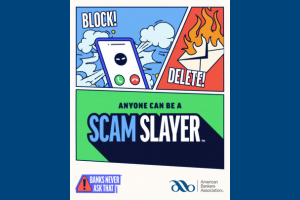
Anyone Can Be a SCAM SLAYER
Banks Never Ask That

Stop, Check, and Verify: Protecting Yourself from Scams
Scammers are constantly looking for new ways to trick people into giving up personal information or sending money. One of their most effective tactics is creating a sense of urgency so you act before you have time to think.
The good news? A few simple habits can help you spot a scam before it becomes a problem.
Don’t let urgency pressure you
Be cautious of unexpected calls, texts, or emails claiming there’s a problem with your account or asking you to take immediate action. Scammers may threaten to close an account, claim suspicious activity has occurred, or insist that you send money right away.
If you’re feeling pressured, stop. You don’t have to respond immediately.
Think before you click
Unexpected links can lead to fake websites designed to steal your login information. Instead of clicking a link in an email or text, open your bank’s website or mobile app directly.
And remember: a familiar log, phone number, or professional-looking message doesn’t necessarily mean it’s legitimate.
Protect your information
Never share passwords, PINs, or one-time verification codes with someone who unexpectedly contacts you. If you’re unsure whether a request is legitimate, contact your bank directly using a trusted phone number.
Be particularly cautious if someone asks you to move money to “protect” it or requests payment through an unfamiliar method.
Take a few steps to protect your accounts
Good security habits can make a difference:
If you think you’ve responded to a scam or shared sensitive information, contact your bank promptly. Acting quickly can help limit potential damage.
Remember: Stop. Check. Verify.
Scammers want you to react quickly. Taking a moment to slow down and independently verify a request can help protect your money and personal information.
For more information about recognizing common scams, visit Banksneveraskthat.